Monday, March 20, 2017

Class Review - - Glass Half Full Perspective; Second Semester is Halfway Started!

Overall, I think this first half of the semester has been going well. I have enjoyed the focus on rhetoric and analysis, the workload, and the tests. I like blogging and reading other blogs and I like the small class atmosphere. I feel like we have covered some very important topics and I know logos, ethos, pathos like the back of my hand.


However, I don’t enjoy when our topic of choice spirals into a political argument, splitting our class. When we discussed gender, I felt like our in-class discussions and videos did not pertain to English much at all as those were directly related to context rather than language and style. I also don’t enjoy when I feel uncomfortable in class adding to the conversation or even just listening in to the conversation. I don’t like when the class becomes so hateful toward each other that I feel as though I would be happier sitting outside in the hallway, although I do appreciate the fact that no one brings feelings from the day before into the next morning of class.


I think we as a class could use more work on rhetoric vocabulary and how to use the terms because, memorization is great and all but without knowledge of application, it’s no use. I can barely even remember the words we were quizzed on so long ago let alone actually be able to use and apply them to a rhetoric analysis.


And personally, I think I need help with imaginative writing. I struggle with staying on topic and continuing with my original plot and spur-of-the-moment editorial decisions that wreck my whole story. I struggle with starting and finishing a made up story. I like written structure; rhetoric analyses appeal to me because everything I need to write about is right in front of me. I can’t effectively develop a personality of a character, I can only describe physical features and environmental descriptions. I struggle with finding my own pace and sticking to it and I struggle with finding my own creativity because, sometimes, it just doesn’t seem to be there.

Monday, March 6, 2017

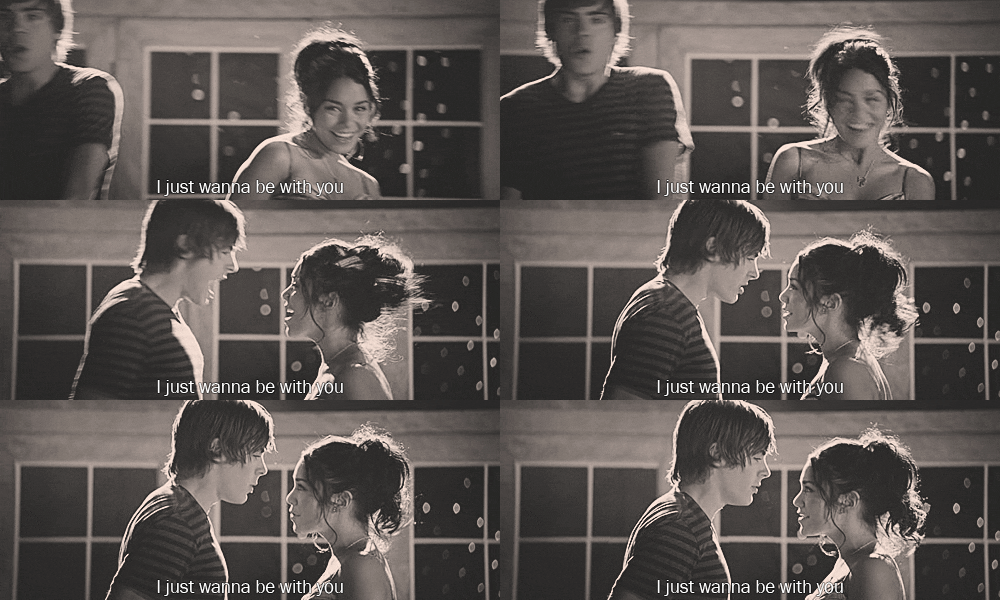
High School Musical

Considering the fact that it is questionable that the entire cast was even in high school at the time, the all-around Disney Channel classic movie series, High School Musical, was in most ways a fantasy.


Maybe it’s just my skewed perspective, looking at this from small-school, small-town goggles covering my eyes and tinting my vision with rose hues. However, I don’t find that the filmmakers were trying to convey a realistic message. The characters were very stereotyped; the “jock-group” of basketball players, the “nerd-group” of socially awkward outsiders, a “new-girl” trying to find her place and ends up catching the attention of the biggest jock at the school.


I do believe that the overall message of the movie series, “follow your passion,” seems pretty realistic. It’s difficult to do nowadays. However, these movies, like any other Hollywoodized film looking to buy a couple more bucks while in the box office, take the idea and the message they’re trying to convey to a completely overdramatic and over-fantasized level. It seems almost as if at points in the films, the world stops spinning so the top basketball player can sing his heart out without the fear of judgement.


Despite the brutal truth of high school, fitting in does not come easy. The movies do a good job displaying the main character’s growth as he slowly learns to embrace himself even when his teammates don’t. He learns to do what he loves and doesn’t fear “standing out” from everyone else. In the end everyone seems to have a hidden passion locked away, whether it be dancing, cooking, playing an instrument, etc., which proves slightly unrealistic because there is very low probability that high schoolers would immediately just begin to feel completely comfortable with themselves and with sharing their secrets with their peers.


There are some true aspects to these films, as there are to all films if you delve deep enough into analysis, but the unrealistic aspects seem to outweigh the truth found. These movies entertained me as a younger girl (and I haven’t watched them recently but I’m sure I would still be entertained) and had me so excited to go to high school. I couldn’t wait to be a part of such a massive conception. Overall, based on my experience and experiences I have heard about, I do not believe this movie was realistic. Amusing, yes. Practical, no.

Friday, February 24, 2017

Ever Thought About Sitting At An All Boys Lunch Table? What About All Girls?

A general hush came across the usually talkative lunch table as a teacher scuttled by, shuffling papers and high-tailing it to their room before their next class. Food was being shoved down all the mouths at the table for that short moment, hoping to account for the odd and unusual silence that swept over them all.

It’s almost like an unspoken agreement among them that anyone on the outskirts of the perimeter is not to know the specific inner-workings of their minds. Now, granted, the “specific inner-workings of their minds” include, but are in no way limited to, a rush of adrenaline courses through their veins as life plays in slow motion all because they land a water bottle flip or endless hours of jokes filed safely away in their brains from a shared list of favorite TV shows and movies or thinking hard to come up with the most pointless and embarrassing dares to drop onto their buddy sitting across from them, shaming them into any ridiculous task. The general stuff, like hating homework, being hungry, and watching sports, doesn’t have strings attached when it comes to outsiders overhearing their discussions. Heck, those loud mouths might even hope a teacher will overhear the number of hours they spent doing classwork rather than doing important tasks such as sleeping or partying.

Yet, none of the young minds are quick enough to pull an acceptable conversation out of their butt for a superior’s ears to process. Life is breathed into the unfrozen table once the faculty member was safely in her room with the door shut. Conversation moved from a relaxed tone to a depth and volume slowly increasing in animation. Bursts of laughter and fleeting moments of exhilaration from intense conversation falls over the once-dead table make up for any lost time spent in silence.


Now, in comparison to the crisp silence that overtook the first table as a faculty member passes, a second table’s volume easily fluctuates depending on how close an outsider is to the perimeter. The closer to the perimeter an adult nears, volume picks up, hoping someone will overhear the details about the a-MAZ-ing party they attended over the weekend, earning themselves some big bonus points on climbing the ladder of highly respected social status or the new fifty dollar makeup that was bought in three different shades or the sadly important number of likes their most recent selfie on Instagram has racked in.

The dress-to-impress mentality is so ingrained in the largest part of the brains at the table and each member strives to look their best, just in case they get pulled out of school for an urgent call concerning a modeling gig. However, when there aren’t any adults to act socially impressive around, the table conversation turns sharply from how much fun they can be to how much stress is contributing to the bags under their eyes and the large piles of homework assigned in higher level classes.


The unspoken reality consists of a stressful night at work last night, falling asleep halfway through the AICE Marine homework, unpopular opinions of any controversial topics shared. The vibe being radiated off of the table turns from upbeat and pumped, from the table that everyone wanted to sit at if even for just a day, to cold and uncomforting. The table that becomes enveloped in deep conversation and perimeter avoided at all costs by outsiders.

Monday, February 13, 2017

Analysis of "The Myth of The Latin Woman"

Poor experience after poor experience is what Judith Ortiz Cofer’s piece “The Myth of The Latin Woman” focuses on. From running into drunk men on buses to overdressing for simple occasions to being assumed a waitress in a restaurant, the “myth” of the Latin woman is obviously a negative perspective.


In Cofer’s writing, she uses words in English and in Spanish, to prove her statements about, “master[ing] the English language,” but to help the audience understand the idea that she has stayed connected to her culture. In paragraph 3, she mentions a “bodega,” which without use of the context is difficult for a girl like me, after three years of Spanish classes, to pick up on. Her style of writing is widely varied, focusing on sarcasm about cultural stereotypes or impressively described frustrations with the lack of respect from other cultures and ethnicities. She uses the English language and ties it in with her own background to create a stronger argument.

The speaker is all Latin women, specifically Judith, however her voice seems to speak for more than just one mouth, as she mentioned her friend working on her Ph.D who says “doctor still shakes his head in puzzled amazement at the ‘big words’ she uses.” Judith’s voice is her friend’s voice also. The occasion she is describing is a lifetime of unequal treatment and wrongful experiences. Her past that cannot be undone, that will just focus her on improvement in the future. The audience is majority groups around the world, speaking up for the minority groups about the lack of respect. She uses convincing arguments by describing her personal experiences with great detail and diction, like in paragraph 4 when she says, “... neither the music nor the colors we wore could be too loud.” Her purpose for writing such an essay is to raise awareness and to create a change. She even explicitly states that in her essay in the second to last paragraph, claiming. “My personal goal in  my public life is to try to replace the old pervasive stereotypes and myths about Latinas with a much more interesting set of realities,” and an experience at the third to last paragraph, a woman ordering a cup of coffee just based on her Latina appearance. The subject of this essay was the unequal treatment Cofer faced on a daily basis and her determination to change the world.

Cofer establishes her ethos immediately, detailing in her second paragraph her inability to leave “the island,” Puerto Rico, behind her. She is granted credibility throughout the essay as her experiences add up and her descriptions with spanish terms are taken into account. The audience feels a connection with  this woman, and is therefore drawn to feel pathos from her embarrassing or angering experiences, feeling empathy for Cofer in her descriptions. As for logos, she establishes her logical ideas with actual lifetime experiences. She justifies all the claims she makes with her own personal recollections.

I think this essay was effective is creating an awareness for the rest of the world. Judith, through use of language and choice of style in her writing, accomplishes her purpose.


Tuesday, February 7, 2017

I Want a Husband

I belong to that classification of people known as daughters. I live in a house with three guys (2 brothers and a father) and my mother. I am a daughter and a sister. And, not altogether incidentally, I am a girlfriend.


Not too long ago an older female friend of mine in college came to me concerning a recent breakup. Her male ex-counterpart had danced upon the idea of a forever-together but, when the time came to put all his words to the test, he somehow disappeared. Now she is looking for a husband, for a man who will commit. As I thought about her while I was running one morning, it suddenly occurred to me that I, too, would like a husband. Why do I want a husband?


I would like to have a man who will get a good paying job so we are in a strong financial situation to raise a family. I want a husband who will support me on my quest to find a job of my own that I enjoy. And while I work or look for work, I want a husband who wants to spend time with his kids and be a part of their life. I want a husband who will coach their sports teams or go to their dance recitals or do whatever it takes to help them pursue their passions. I want a husband who will take turns with me packing their lunches at night and bringing them to school in the mornings. I want a husband who wants to spend time with me just as much as he wants to spend time with the kids. I want a husband who I can rely on when I need it. I want a husband who won’t leave. I want a husband who I can tell everything to and vice versa, a husband who is my best friend.


I want a husband who will help me when I am in a crisis, no matter the level of urgency. I want a husband who will help me fix a garage door or trade cars with me on a busy day if mine has a flat tire. A husband who will take my car in to get said tire patched while I’m out. I want a husband who will listen to me when I need to talk and who will talk to me when he needs someone to listen. I want a husband who respects me. I want a husband who wants the best for me. I want a husband who will support me. I want a husband who loves me.


I want a husband who is optimistic and fun. When my husband and I are invited out by my friends, I want a husband who will make the best of the situation just as I will try to do when the tables are turned. I want a husband who will enjoy a quiet night in with the family just as much as a night out with his guy friends, keeping in mind I feel the same way.


I want a husband who will take me out on fancy dates and offer to pay for the bill, a husband who will give me his jacket when I get cold, a husband who will laugh with me and tell me I’m beautiful even with spilled spaghetti sauce on the collar of my new white dress. And, of course, I want a husband who will comfort me during scary movies and who will let me fall asleep on him when I can’t keep my eyes open any longer. I want a husband who isn’t lustful. I want a husband who is genuine and sincere. I want a husband who will always be down to spend extra time with me. And I want a husband who will stick with me.

My God, who wouldn’t want a husband?

I Want a Wife Analysis (super interesting !!!!)

Satire runs through the words of Judy Brady’s essay, “I Want a Wife,” faster than any Olympic sprinter I’ve ever seen. She opens her essay with an ironically sarcastic tone, the first two paragraphs capitalizing on her relevant classification and her experience on the topic, immediately establishing ethos by expressing her knowledge on the topic. For being an essay written in 1971, where women were still looking to crash workplace stereotypes, the statement she is making is fairly bold. But going referring even farther back than the first two paragraphs, this essay could draw initial attention through the title, “I Want a Wife,” and through the fact that it was written by a woman. One could be led to question her sexual orientation just off first glance. She is engaging her audience, US citizens, immediately.

In Brady’s longest paragraph, #3, she discusses her subject immediately, combating the average roles of, what I’d assume to be, her usual chores. Washing clothes, keeping track of appointments and children, and keeping her spouse in check. Each task is mentioned with a sarcastic undertone, giving us a feel for the purpose of her writing; to discuss her opinions through irony and humor.. Brady makes usual activities seem ridiculous like, for example, “I want a wife who takes care of the children when they are sick, a wife who arranges to be  around when our children need special care, because, of course, I cannot miss class at school.”  This adds an element of irony to the piece, her discussion barely touching the traditional “American Dream” giving me the mental picture of a white picket fence around her house and the classic “Man-in-the-movies” husband that rushes off to work in the morning after kissing his wife goodbye.

In her next five paragraphs, Brady continues with similar essay structure, drawing in examples that make the audience question what purpose the spouse serves at all. Looking for a wife that can “plan the menus, do the necessary grocery shopping, prepare the meals, serve them pleasantly, and then do the cleaning up.” Does the spouse in this home do anything? Each following paragraph contains similar examples and statements with an undertone of frustration. She draws the essay to an end with as sarcastic an  end as her start. After listing all the qualities of a perfect wife, her final point is, “My God, who wouldn’t want a wife?”

Now, where I feel that the situation is still relevant today, I think it is less intense. In 2017, it still is an issue for sure, I can agree with that. But I feel like in this day and age, we have growing awareness for minority rights. We are  s-l-o-w-l-y  working towards change. I, personally, have a different experience than Brady just from my seeing my parents as I grow up. They have equal respect for one another and for the things they have to get done. They are always working together and supporting each other, rather than expecting too much of each other. However, despite my different view on the situation, I understand where Brady is coming from and I believe her essay is still relevant. On top of that though, I do believe things are changing.

Wednesday, January 25, 2017

InaugurationZzz

Recently, the 45th President of the United States was inaugurated into office. He, like all those before him, read an inaugural address and he, like all those before him, had some pros and some cons.


However, before I get into it, I want to make a few things clear:
A.) This is not an analysis of our president, it is a analysis of his words and his rhetoric. My political views are going to be kept out of this.
B.) I am not going to use his name in the first half of this entry. There is a strong negative connotation attached to his 5 letter name and I want you to do your best at giving me a fair chance to explain my thoughts. Everyone already knows who I’m talking about -- why not experiment?


Coming into this blog, I’ve listened to this speech maybe about 3 times now (twice in my Government and Economics class and once in my English class) and the first time-and-a-half I wasn’t really paying much attention. Somehow, I tuned my brain in for the last time-and-a-half and once my brain connected the words to their meanings, I began to pick apart the language and effectiveness (being given a tangible transcript to follow along with and annotate the second time we watched in Gov and Econ probably helped me there).


In order to make sure I’ve covered my bases, I’m going into quick detail on the audience -American citizens, radical terrorists, and citizens of other countries around the world- the purpose -basically to introduce himself to America, complexly to unite a country of divided citizens through diction and tone- his subject -to introduce the “future” of America- the speaker -the 45th President of the US- and the occasion -the inauguration of a new president of a different party.


Regarding the actual words of the speech, a few major points stuck out to me. About 6 minutes into his speech, he mentions, “...Mothers and children trapped in poverty in our inner cities; rusted-out factories scattered like tombstones across the landscape of our nation; an education system, flush with cash, but which leaves our young and beautiful students deprived of knowledge; and the crime and gangs and drugs that have stolen too many lives and robbed our country of so much unrealized potential.” Hit me in the pathos. Throughout the rest of the speech, he uses phrases like, “refusing to defend … disrepair and decay. … ravages of other countries … stand at the birth of a new millennium,” where pathos cannot be applicable but the choice in diction makes room for logos. The words that actually make up the speech and the tone that’s based off the context makes his points sound like logic. Common knowledge. And, in that sense, I feel like this speech was effective.


However, due to the lost ethos from his campaigning, I don’t believe this speech was effective. While our new president drives one half of the country to happiness, he drives the other half to madness. He damaged his reputation throughout his 17ish months of campaigning through the use of degrading language, inappropriate decisions, and aggressive argumentation. When he entered this inauguration on January 20th, 2017, there was no combination of words he could have used to readily satisfy the general population. Some citizens were far too through with him before he even stepped foot in office while on the other hand other citizens took his words as gospel faster than they even came out of his mouth. Our country is split in two extremes and, despite his speech touching on the necessities of bringing back a unified US (stated toward the conclusion of his speech “When America is united, America is totally unstoppable.”), nothing he could have said could have changed the minds of those who stand firm in their opinions. In that sense, I do not feel like this speech was effective. But I do not think that any speech given in this social situation would be, in this sense, effective.


-------


I want to reenforce the fact that I am not bringing my political standpoint in on this. I think that can arouse unwanted prejudice toward my blog, no matter who or what I agree with.


In my Government and Economics class, we’re also covering speeches from Kennedy, Reagan, and Carter in comparison to Trump. Since we have gone into most detail on Kennedy so far, I am going to use his inauguration speech of 1961 (yes, the “ask not what your country can do for you - ask what you can do for your country” speech) to compare to Trump’s.


The most blatant difference between the two to me is the description. Branching off of what Andrah brought to the discussion in our 3rd block Gov and Econ course, Kennedy used figurative language like it was his job in 1961. I.e. “… those who foolishly sought power by riding the back of the tiger ended up inside.” Or “And let every other power know that this Hemisphere intends to remain the master of its own house.” Or “… a beachhead of cooperation may push back the jungle of suspicion.” So many of his points weren’t meant to be taken literally. In Trump’s speech, his statements were, for the most part, literal. I.e. “… rebuild our country.” Or “… America’s infrastructure has fallen into disrepair and decay.” Or “… we understand that a nation is only living as long as it is striving.” These points all had been described with literal meaning.



A second difference would have to be the difference in where the two leaders were looking when they gave the speech. Kennedy seemed to have had his face toward the future, stating it “… will not be finished in the first one hundred days. Nor will it be finished in the first one thousand days, nor in the life of this administration, nor even perhaps in our lifetime on this planet. But let us begin.” Trump seemed to have his face looking at the past and present, stating “For too long, a small group in our nation’s Capital has reaped the rewards of government while the people have borne the cost” and then went on to discuss some issues with the past. However, do not take my words as a complete generalization. My statements can be proven wrong with few specific quotes just as they have been proven right with my few quotes.
Similarly, both speeches discussed the importance of unification. Both presidents were facing a split country. Kennedy at the heart of the civil rights movement and Trump at the heart of a modern day civil rights movement. Kennedy had acknowledged the strength of unification in his quote, “United there is little we cannot do … Divided there is little we can do.” And Trump discussed this in a point I made earlier. Both of these presidents were trying to motivate their people to a new world and a new chance at unification.


And, I am going to leave off with that as I currently am approaching my bedtime and these past few days I’ve started feeling run down and slightly sick. All the sleep I run away from on a daily is finally catching up to me.


Thanks for reading!!